Showing posts with label finance news. Show all posts

December 14, 2011

Petrol prices may go up by 65 paise; record fall in rupee makes hike inevitable

New Delhi: Petrol prices may be hiked by Rs 0.65 per litre this week if state-owned oil firms manage to get political approval for the move.

While a fall in the rupee to an all-time low of Rs 53.75 per US dollar has resulted in an increase in the cost of oil imports, international rates of gasoline - against which domestic petrol prices are benchmarked - have also increased, a top source at a state-run oil firm has said.

"The under-recovery on petrol is Rs 0.55-0.56 per litre. After adding local sales tax, the desired increase in Delhi comes to Rs 0.65-0.66 a litre," he said, adding that the oil companies will review prices on Thursday and any change will be effective from December 16.

State-owned oil firms have cut petrol prices on two occasions in the past one month after international oil rates eased.

The companies reduced petrol prices by Rs 2.22 per litre, or 3.2 per cent, from November 16 and followed this with a Rs 0.78 per litre cut from December 1.

The source, however, could not say if oil companies will go ahead with increasing prices on Thursday, in line with the practice of changing rates every fortnight. "The actual loss to us is only 50-55 paise. We can tolerate it for another fortnight if need be," he said.

Public sector oil firms, which revise petrol prices on the 1st and 16th of every month based on the average international rates of the previous fortnight, may informally consult the parent Petroleum Ministry before taking a decision.

Parliament is in session and an increase in petrol prices may lead to protests by Opposition parties.

The price of gasoline has averaged $ 111.11 per barrel in Singapore this month, up from $ 108.25 a barrel in the previous fortnight.

December 7, 2011

Bloody hell! Sensex may sink to 13,200, says Credit Suisse. Investors wonder who to trust because Morgan Stanley says it'll go up 16%

MUMBAI: The Sensex is likely to rule between 13,200 and 14,400 points and the rupee may touch Rs 54-55 by June next, Credit Suisse India has said in a report.

"We remain bearish on the overall market, with downside risks to both multiples as well as earnings. The Sensex is likely to fall in the range between 13,200 and 14,400 points and the rupee may touch Rs 54-55 by June 2012," Credit Suisse India equity strategy head Neelkanth Mishra told reporters here.

Last week, Morgan Stanley had said the Sensex will go up about 16% next year. Read here

The market is not trading at its face value and possibility of downtrend is most likely, he said while releasing the Credit Suisse India 2012 Outlook report here.

The trend is already clear, he said and pointed out that "Q2 was the first quarter in two years to see a y-o-y decline in profits for companies in the Nifty. More worrying is that this happened despite a 20 percent annual sales growth, thus indicating continuing margin depletion, which is already at a three-year low.

"We fear that a potential slowdown could impact sales and could put further pressure on operating profit growth due to negative operating leverage," the report said.

The rupee has been one of the weakest currencies globally in 2011 and the weakest in Asia, falling 17 percent since August alone. Credit Suisse believes the rupee would continue to be weaker.

Mishra pointed out that the rupee is likely to continue to weaken over the next three-to-six months, putting more pressure on inflation, delaying rate cuts and hurting foreign- investor returns. "We expect the rupee to touch Rs 54-55 by June next, but it is unlikely to touch Rs 60," Mishra said, adding only debt flows can potentially support the rupee.

However, the stress on European banks and depletion of risk appetite could keep the dollar access for domestic corporates restricted. As a result, estimates and prospects for companies that have dollar revenues but rupee costs have not been updated so far, IT services and pharma exporters in particular, the report said

"We expect the domestic IT services sector to particularly get a second headwind with a structural downward revision in rupee estimates," it said.

In a sustained high interest rate and risk-averse environment, the agency believes rate sensitive sectors are likely to remain under pressure. Further, high interest rates and slowing growth will continue to pressure asset quality at banks. On the high government borrowing, the report said it is also likely to put pressure on credit growth.

December 2, 2011

Lost all your money this year? There's good news for you: Sensex may surge by 16% next year. So, all you can do in 2012 is to see it rise

New Delhi (PTI) The BSE Sensex index could surge by as much as 16 per cent next year, but the rise will be marked by "volatility", investment banking major Morgan Stanley has said in a report. "The probability-weighted outcome for the BSE Sensex is 18,741 for December, 2012, 16 per cent above the current level," Morgan Stanley said.

The BSE benchmark Sensex has lost over 19 per cent so far this year and closed at 16,542.62 points on December 1. The Sensex is down by nearly 22 per cent from an all-time high of 21,206.77 points scaled on January 10, 2008.

On the domestic front, factors like comforting inflation data and the government's recent bold policy announcements are likely to act as a boost for the market. However, economic turmoil in the developed world is likely to act as a dampener.

"Inflation data is already moderating, setting the stage for monetary easing. The bad news on policy has stopped, although the volatility emanating from a weak developed world could keep pegging back Indian equities," Morgan Stanley said.

As per the latest data, food inflation stood at a four-month low of 8 per cent for the week ended November 19. Food inflation was in double digits for five consecutive weeks in October and early November.

"The positive side effect of any decline in inflation expectations will be a relative transfer of savings from gold to equities," the report said.

Given the decline in seasonally adjusted inflation, "The RBI is set to change policy direction via the liquidity injection, CRR cuts and rate cuts path over the coming months," it added.

However, excessive monetary easing in Europe or the US to address anemic growth could trigger a rise in commodity prices, resulting in inflation across India all over again.

In addition, unrest in the Middle East has the potential to create pain via higher oil prices. A substantial depreciation in the rupee value poses the same risk to inflation, Morgan Stanley said.

On the policy front, recent action on FDI in pension funds and retail and power tariff revisions suggest that the bad news has stopped. However, multiple state elections in the coming months could imply continuing policy stalemates.

November 29, 2011

In euro zone crisis, companies plan for the unthinkable to survive the slowdown


LONDON/BOSTON (Reuters) - When Novo Nordisk's chief financial officer met marketing colleagues last Friday the conversation moved far beyond the usual discussion of sales and performance. Jesper Brandgaard asked a simple, far-reaching question: how would the firm set prices for two pivotal new insulin products if the euro collapsed?

The Danish firm, the world's biggest maker of insulin for the treatment of diabetes, sits outside the euro zone but sells into it. It's a question that is being echoed - in various forms - in the boardrooms of banks, brokerages, trading houses, law firms and the world's leading manufacturers.

"It's hard to make detailed plans but we need to think through how our pricing strategy would fare if there were suddenly a dismantling of the euro," Brandgaard told Reuters. "How do we avoid falling into a trap? This is the first time I've asked such a question. It's a topic that is increasingly on the radar."

In the case of the products in question - Degludec and DegludecPlus, two ultra-long-acting insulins - Novo Nordisk has time on its side. The new drugs are still working their way through the regulatory approval process and probably will not reach the market until late 2012.

Planning for a breakdown of Europe's 17-nation single currency is not easy. Like many business leaders, Brandgaard views a break-up of the euro as possible though not yet probable -- but the odds are increasing. In a Nov 23 Reuters poll 14 out of 20 economists said the single currency would not survive in its current form - and companies are starting to plan for a worst case scenario.

Their trepidation is best summed up by Martin Sorrell, the head of the world's biggest advertising agency WPP. "The complexity fills everybody with such appalling fear and is so complicated that the last thing in the world you want to happen is that," Sorrell told Reuters on Monday. "But the honest answer is that, like everybody else, you try and contingency plan for any break-up of the euro zone."

Drawing on interviews with company officials, bankers and lawyers in Europe, the United States and Asia and companies' regulatory filings, Reuters has pieced together a picture of patchy preparedness for the possible demise of the 12-year-old euro currency, an event that would be unparalleled in recent history.

"These days, it's a part of almost every risk management conversation that comes up," said a senior player in London's insurance market, speaking like many in this story on condition of anonymity because of the sensitivity to their business.

Some of the most active contingency planning is happening in European countries outside the euro zone that have strong trading links with the currency bloc - Denmark and Britain being leading examples. Of the 33 companies with the biggest exposures to the euro zone in sales terms, five are British, according to Thomson Reuters data. Health care, energy and consumer goods are among the most exposed industries.

A number of British firms, including the world's biggest caterer Compass Group, have said they have discussed or put in place contingency plans to deal with a euro collapse but most are reluctant to give details.

"Most business people have given up waiting for the political Godots. You just can't run your business on the basis that something will turn up, so you have to plan on the basis that it doesn't turn up. So you think about what legally and contractually it is going to mean. You also say 'I'm going to run my balance sheet as conservatively as possible'," WPP's Sorrell said.

Testing the system

Banks, brokers and exchanges are in the front line.

ICAP, the world's top broker for foreign exchange and government bonds, said on Monday it has tested its trading system to handle the collapse of the euro zone and re-emergence of national currencies.

It is not alone in carrying out 'war games'. A senior banker at a large investment bank said he had a team of 20 people globally running all kinds of scenarios all the time. That team was now spending a lot of its time on the possible break-up of the euro. They had simulated a weekend crisis by running through the different stages of Friday night, Saturday and Sunday in one full working day. In addition, they had looked whether they would have enough people (and the right ones) available and made sure they knew where to reach them.

"It's my job to assume the worst. You can test all kinds of benign scenarios, but if something really bad - let's say a sudden overnight default of Italy - were to happen and we hadn't tested that, I wouldn't be doing my job properly. If that latter scenario were to occur, things would look very ugly indeed. There simply wouldn't be enough time to sort out all the various trading positions and look at all the paperwork," the banker said.

In his estimation, a return to the drachma in euro zone minnow Greece was the least of his concerns. He likened Greece to bankrupt US broker-dealer MF Global - annoying but not a real issue - and Italy to Lehman, whose collapse marked the start of the 2008 financial crisis.

Britain's regulator, the Financial Services Authority, has told Britain's banks to draw up contingency plans in case there is a disorderly break-up of the euro zone or exit of some countries. "We cannot be, and are not, complacent on this front," Andrew Bailey, deputy head of the FSA's Prudential Business Unit, said on Nov. 24.

US firms are testing their systems too. A.M. Best Co, the main ratings agency for the insurance industry, said on Nov. 22 it is doing additional stress testing on insurers given deteriorating conditions in Europe. The agency, which just conducted a similar review two months ago, said it is looking at underwriters' exposures on a case-by-case basis to see if any have additional risk from the weakening euro zone.

Safeguarding the cash

For non-financial firms, a key focus of efforts for firms worried about a euro collapse is in trying to safeguard their cash. Corporate balance sheets currently are very strong with upwards of $1 trillion net sitting on them, a reflection of companies' reluctance to invest in adding capacity or in buying other firms.

The chief executive of a European company with annual revenues of more than $10 billion a year told Reuters during a recent visit to London that his board had discussed how to handle a euro zone collapse but that it had proved a very short meeting. Other than ensuring their cash deposits were in the safest possible banks and relying on the broad international nature of their business, executives quickly concluded there was little more they could do.

Treasury department teams are shifting money to safe havens and rehearsing rapid-action scenarios. Budgets for 2012 are being looked at again. And outside consultants are being brought in to advise on exposure to peripheral Europe - Greece, Ireland, Spain, Portugal and Italy.

Central bank data shows a decline in deposits from banks in weaker euro zone countries. Separating data on corporate deposits from personal bank accounts data is nigh on impossible, but anecdotal evidence points to corporations moving euro accounts to safe havens. Some big firms such as engineering group Siemens and carmakers BMW, Daimler and Volkswagen , are licensed to deposit funds with the European Central Bank, the safest of all safe havens in the euro zone.

Siemens finance chief Joe Kaeser said in a Nov. 10 media call on the group's quarterly results that a considerable proportion but less than half of its 12 billion euros in liquidity had been parked with the ECB. About a year ago, Siemens -- a maker of fast trains and gas turbines -- acquired a banking licence to be able to deal directly with the ECB.

BMW said on Monday its approach to handling excess liquidity had not changed and that it continued to use a number of international commercial banks as well as the ECB's deposit facility. Daimler said it used surplus cash mainly internally. Volkswagen did not immediately respond to calls seeking comment.

Similar caution emanated from companies in other industry sectors.

Simon Henry, chief financial officer of oil company Royal Dutch Shell, said as a consequence of Europe's debt crisis it was taking extra care in investing its $20 billion cash pile. "It's with secure counterparties and its short term," Henry said.

Drugs firm AstraZeneca told Reuters it was carefully monitoring its exposure to the banking sector in light of the debt crisis and had increased its holdings of US government Treasury bills.

The chairman of another company in Britain's FTSE 100 index of leading firms said the shortage of AAA rated banks was complicating life. British firms don't have access to the ECB because Britain is outside the euro zone.

Different industries also have differing abilities to reduce exposure to risky markets.

Pharmaceuticals is one sector where firms have limited wiggle room, since companies have an ethical obligation to supply life-saving medicines, even when payments are uncertain. In fact, drug makers have already been through something of a "dry run" in Greece, after being forced to accept government bonds instead of cash for some outstanding debts. Those bonds were either sold immediately at a discount to face value or are still sitting on their books at even lower value today. Greece accounts for only around 1 percent of the global pharmaceuticals market, so the impact on major international companies has been minimal. Italy and Spain, however, are much bigger markets.

Company filings

A significant number of US companies in a wide range of industries, including one in three members of the widely watched Dow Jones industrial average, warned investors of their rising concerns about Europe in quarterly regulatory filings.

"Western Europe appears to be experiencing increasing challenges given the uncertainty around fiscal and monetary policy direction, which likely impacts consumer confidence," diversified manufacturer 3M Co said in a filing with the US Securities and Exchange Commission.

Bank of America Corp added the European debt crisis into its regular list of risk factors it advises investors to be aware of: "There remains considerable uncertainty as to future developments in the European debt crisis and the impact on financial markets."

And drugmaker Merck warned shareholders that cutbacks in spending by cash-strapped European governments could take a toll on how much it can charge for its medicines.

Other companies that called attention to the crisis in their filings included American Express Co, Boeing Co and Cisco Systems Inc.

US companies that do business in Europe are expecting exchange rates on European currencies to be more volatile in the coming months, and have stepped up their efforts to hedge against these risks, experts said. Beyond financial hedges, though, which become pricier at times of vulnerability, manufacturers should think about "natural hedging" -- localising supply chains within the euro region, suggested Stefano Aversa, co-president of Alix Partners LP, a global consulting company.

"One of the things that companies have to think about is natural hedging, which is the only real protection, having production as much as possible balanced with where you sell and where you buy. This is the No. 1, because you might see swings literally of two or three points on the bottom line due to this here," Aversa said in a phone interview.

Other companies are rewriting sales contracts to allow them to adjust prices if currencies experience large swings, Aversa said.

US companies may be more prepared for a European meltdown simply because the credit crunch of late 2008 was felt more sharply in the United States, Aversa said. The downside to the resulting conservatism, though, is that companies are already having a harder time getting access to credit as banks tighten lending standards.

"All of the banks are doing the stress tests and frankly are becoming much more prudent," Aversa said. "One of the consequences of it for the industrial companies, particularly the not-big ones, is a restriction on refinancing and credit in general, which is now pretty apparent."

Work for insurers, lawyers

The prospect of a euro break-up raises a mountain of legal and financial questions. Lawyers and bankers have begun combing through loan agreements, leases and other financial contracts to see how they would survive any serious euro disruption.

Most contracts failed to foresee a collapse or partial disintegration of the euro and the stroke of a lawyer's pen a decade ago could have heavy repercussions today, stemming from the choice of jurisdiction or the laws governing individual contracts. Some banks have already started thinking about how to revise the standard documentation used in future loan agreements to anticipate a break-up of the single currency.

"From the late 1990s onwards, commercial contracts were written to include express provisions to deal with the transition to the euro but I am not aware of any being written so far that contemplate any country exiting the euro," said Jamie Wiseman-Clarke, a senior associate at London law firm Berwin Leighton Paisner, specialising in aviation, rail and shipping. "The euro was assumed to be stable," he added.

It is a high-risk process.

Ill-judged wording might result in a creditor having to recover its money in the currency prevailing on the day in a country departing the euro area rather than the euro. There are also concerns that a euro exit would tip some companies into default on their loans. The redenomination of their local currency could trigger a drop in revenues that would in turn prevent them meeting their obligations on euro-denominated debt or force them to break loan covenants.

A rash of technical payment defaults on all the loan borrowers from a departing country is a Doomsday scenario that would keep the lawyers busy as they fix documentation that failed to envisage such an outcome, bankers said.

More likely than a mass technical default is that some companies would simply be unable to pay or meet loan conditions because of the dire economic conditions and drop in demand that some economists are predicting from a break-up of the euro.

Worse still, UK law firm Clifford Chance has warned there might be practical difficulties in recovering payments since any decision to quit the euro would probably go hand in hand with exchange controls. Depending on how courts read the background to the decision that could lead to a stand-off between the laws of different states.

Planning is not made any easier by the fact that many continental European companies tend to be more politicised than their counterparts in the United States, so the question of a break-up is virtually taboo. Franco-German-led aerospace giant EADS, for example, is often described as the industrial counterpart to the euro. Its stakeholders include the French government and, soon, the German state. During much of its 11-year history it was a conduit for Franco-German tensions.

"If people learned that a big CAC40 (French blue-chip) company was preparing a worst-case scenario it would spread anxiety and would be interpreted as a very damaging blow to the euro," said a communications adviser to a number of top French companies, asking not to be identified.

As for a complete collapse of the currency, the consequences are so unpredictable - and unthinkable to a post-war generation immersed in European integration -- that many say there is little point in running models. What counts more, they say, is a nose for survival.

"We are not running contingency plans like that. We want the euro to survive but we make tangible things. We would not die without the euro," said the chief executive of one of Europe's largest manufacturing companies.

November 25, 2011

Hungary is junk, says Moody's


Budapest: (Reuters): Moody's slashed Hungary's government bond rating to "junk" late on Thursday, citing high debt levels, weak growth prospects and uncertainty about its ability to meet fiscal goals, in what the government called part of "financial attacks" against the country.

Moody's cut Hungary's government bond rating by one notch to Ba1, below investment-grade, with a negative outlook hours after rival Standard & Poor's held fire on a flagged downgrade on news of Budapest's planned talks on getting international aid.

Hungary returned to the International Monetary Fund and the European Union last week after the forint currency fell to record lows against the euro in the wake of a warning by S&P that Hungary could lose its investment-grade credit score.

The forint fell 1% from its Thursday close in the domestic market to 315.80 versus the euro in early trade on Friday. It hit a record low at 317.90 versus the euro on November 14 according to Reuters data.

Moody's cited rising uncertainty about Hungary's ability to meet fiscal goals, high debt levels and what it called increasingly constrained medium-term growth prospects as the main reasons behind the downgrade from Baa3.

"Moody's believes that the combined impact of these factors will adversely impact the government's financial strength and erode its shock-absorption capacity," it said in a statement.

"The rating agency's decision to maintain a negative outlook on Hungary's ratings is driven by the uncertainty surrounding the country's ability to withstand potential event risks emanating from the European sovereign debt crisis."

The Economy Ministy said in a statement on Friday that the downgrade was professionally unfounded and considered it to be what it called "financial attacks against Hungary".

The government cited its commitment to keep the budget deficit below 3% of economic output next year, 1% of GDP worth of reserves in the 2012 budget and an expected decline in debt levels as arguments against the cut.

"Obviously, the forint's weakening is not justified by either the performance of the Hungarian economy, or the shape of the budget," the ministry said in a statement.

"Therefore, it can be driven only by a speculative attack against Hungary, which can be fuelled by exactly these kinds of professionally unfounded assessments by rating agencies."

Even with IMF/EU deal, Hungary vulnerable

Moody's said the request by Hungary, which was saved from collapse with a 20 billion euro IMF/EU loan in 2008, for renewed assistance illustrate the funding challenges facing the country, adding that a deal could alleviate immediate funding challenges.

Hungary will have to roll over 4.7 billion euros of external debt next year as it begins to repay parts of its 2008 loan to the IMF. Budapest has said it wants to use a new IMF/EU deal as a "safety net" against turmoil in the euro zone.

"However, Moody's believes that, even with such an arrangement, the government's debt structure will remain vulnerable to shocks in the medium term, which are inconsistent with a Baa3 rating," it said.

The weak forint pushed Hungary's government debt to 82% of economic output by the end of the third quarter, undoing the impact of a $14 billion pension asset grab by the government, which cut debt by several percentage points.

Moody's said it would further lower Hungary's rating if there is a significant decline in government financial strength due to a lack of progress on structural reforms and implementation of a medium-term plan.

It said the government's 2.5% of GDP budget deficit target for next year may be difficult to meet due to high funding costs and low economic growth.

Moody's said it would consider stabilising the outlook on the ratings if the country were to embark on a sustainable consolidation path, involving a more consistent implementation of the medium-term plan and its euro convergence programme.

The ratings cut came just hours after S&P deferred decision on a possible downgrade of Hungary to non-investment grade until the end of February pending talks with the IMF/EU about a new aid package.

Fitch, another rating agency which has Hungary in the lowest investment-grade category, said on November 18 that an agreement on a new IMF programme would be a positive step and could reduce downward pressure on Hungary's sovereign rating.

Why a beggar does not want to lose his BPL status


November 24, 2011

RBI approves loan extension to Air India; Kingfisher sucks on its thumb

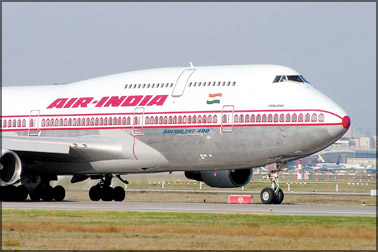
Mumbai: (Reuters) The RBI has approved extension of the tenure of loans to troubled state-run carrier Air India by five years with the loans now being due for repayment after 15 years, two sources with direct knowledge of the matter told Reuters.

A consortium of 26 lenders to the debt-laden carrier that include State Bank of India , ICICI Bank , Bank of Baroda among others will meet on Monday to discuss the loan recast, one of the sources said, adding the process would be completed within 120 days of the approval.

"I think banks will approve it on Monday. It is in the best interest of banks to do it soon," the source said.

Air India's lenders had submitted a restructuring proposal to the Reserve Bank of India seeking its permission to extend the loan tenure, among other things, the sources said.

Air India, with total loans of $9.5 billion, is in talks with banks to restructure its working capital debt and is in the midst of implementing a turnaround plan to generate cashflows.

The carrier is expected to post a pre-tax loss of 70 billion rupees for the year-ended March, as per government estimates, hit by a bloated cost structure and stiff competition.

The CAG had in September criticised Air India's decision to buy 111 Boeing and Airbus planes in 2005/06, saying it imposed an "undue long term financial burden on the carrier".

The airline has not posted a profit since merging with former state-owned partner Indian Airlines in 2007 and relies on handouts from New Delhi to survive.

The cabinet has approved an equity infusion of $112 million into the ailing carrier.

The aviation minister Vayalar Ravi told Reuters that the government was still in talks with the RBI on Air India's balance sheet, financial position and future projects.

No govt help to Kingfisher

Ravi on Thursday ruled out government intervention for the beleaguered Kingfisher Airlines and said the carrier would have to talk to its lenders and find a way out of its financial deadlock.

"They have to talk to the banks and put their own money. It is for them to decide," Ravi said.

The Airports Authority of India, or AAI, has recently put Kingfisher on cash and carry, meaning the airline would have to pay outstanding dues to the operator to avail its services, an official said.

Airlines generally pay on credit against bank guarantees.

Kingfisher declined to comment on the AAI move.

Earlier in the day, Kingfisher said lessor AerCap Holdings NV would take back two of its aircraft in coming months as both the companies could not agree on extension terms.

Talk heated up recently on state intervention to help Kingfisher on the lines of Air India. Earlier this month, the prime minister Manmohan Singh told local media the government would try to find ways to get the carrier out of its financial trouble.

But Kingfisher's chairman and liquor baron Vijay Mallya said he had not approached the government for a "bail-out".

India's airlines are struggling with surging oil prices, high sales tax on jet fuel and below the belt pricing due to increased competition, leading to massive losses.

They are on course to post record losses of more than $2.5 billion for the year ending March 2012, and investors have become wary of an industry that, just a few years back, ordered hundreds of aircraft in an ambitious bet on the future.

Kingfisher Airlines saw its September quarter net loss double as its net worth eroded, prompting it to approach lenders for a cushion to ease its debt burden.

Big B prefers small to big in in share market

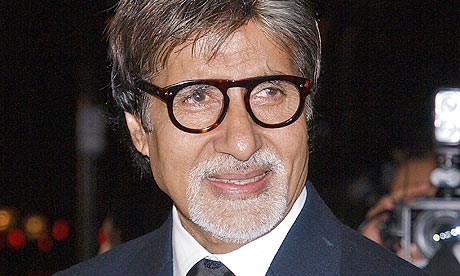
Mega star Amitabh Bachchan, known as the Big B of the Bollywood, invests in small and mid-sized companies as well when it comes to stock market purchases, and is sitting on losses on some of his recent investments.

As per the data available with the Bombay Stock Exchange, Bachchan holds stakes between 1-3% in at least three listed companies -- Neuland Laboratories, Birla Pacific Medspa and Fineotex Chemical.

The total market value of Neuland Labs stands at about Rs 40 crore, while that of Birla Pacific Medspa and Fineotex are Rs 122 crore and Rs 100 crore respectively.

Of these, he has been holding Neuland shares since the last quarter of 2010, while he has purchased shares of the other two companies in the past four months.

His name appears as 'Amitabh Harivansh Rai Bachchan' on the shareholder lists of these companies. Queries sent to him regarding these stock purchases remained unanswered.

A broker said that the filmstar might have invested in shares of large companies as well, but those holdings could be below one%, and therefore, have not been disclosed by stock exchanges.

The listed companies are required to disclose their shareholders having one% or above stake at the end of every quarter.

Bachchan had earlier dabbled into the corporate world by setting up his much talked-about ABCL (Amitabh Bachchan Corporation Ltd) to produce films and other entertainment related activities. The venture was later renamed AB Corp.

Also, the asset and liabilities affidavit filed by his wife Jaya Bachchan as a Rajya Sabha member in 2009 reportedly disclosed investments worth about Rs 122 crore in companies by Amitabh and about Rs three crore by Jaya herself.

The latest purchase, as per data available with the BSE, was of 80,000 Fineotex shares for about Rs 1.2 crore on November 17. Prior to that, he also purchased 90,000 and 1,10,000 shares of the same company on November 14 and November 15, respectively.

Bachchan purchased a total of 2.8 lakh shares of Fineotex on these three days for about Rs 4.6 crore.

At the current market price, these Fineotex shares are worth about Rs 2.5 crore and account for a 2.5% stake in the company.

Fineotex shares today fell by 10% to Rs 87.70. They had scaled a 52-week high of Rs 353 on June 28, 2011.

In another recent investment, Bachchan also holds 16 lakh shares, or a 1.43% stake, in the newly-listed Birla Pacific Medspa. The BSE data shows that Bachchan purchased 10 lakh shares of this company on August 9, 2010 for Rs 1.85 crore.

November 23, 2011

Know why rupee is falling against dollar

The rupee slid to an all-time low of 52.73 against the US dollar on Tuesday but bounced back more than 1% on Wednesday after suspected RBI intervention.

The rupee is under pressure as foreign investors are paring their exposure to Asia's third-largest economy amid global uncertainty and mounting worries over the domestic economy.

Foreign funds sold more than $500 million worth of Indian-listed shares over the five trading sessions to Monday, reducing net inflows for 2011 to under $300 million, a tiny sum compared with the record investments of more than $29 billion in 2010.

The rupee has lost more than 14% of its value this year, making it the worst performing currency in Asia. The second-worst is the Thai baht, which has dropped only 3.5%.

Views of investors on the rupee are now at their most pessimistic in more than three years, a Reuters poll showed on Wednesday.

With the Reserve Bank of India (RBI) seen reluctant to intervene in the market to check the rupee's slide, some analysts are forecasting that the partially convertible currency will slip to as low as 55 against the dollar.

The following are some of the domestic macro-economic factors that are pushing the Indian unit down:

Slowing economic growth

India's economy emerged largely unscathed from the 2008 financial crisis and looked set to achieve its pre-crisis growth rate of 9%, attracting investments from foreign players chasing higher returns.

However, a policy paralysis in the wake of a slew of graft scandals, combined with high inflation and rising interest rates, soon began to undermine the domestic demand-driven growth story.

The annual growth rate for the current fiscal year was originally budgeted at 9% but private economists have said that growth could be well below the 8% mark.

The RBI has already downgraded its growth projection for the fiscal year ending March 2012, from an original 8% to 7.6% now. Some policymakers have begun to concede that growth in the current fiscal year could slip as low as 7%.

Worsening government finances

In February, New Delhi had budgeted a fiscal deficit, for the year ending March 2012, of 4.6% of gross domestic product on assumptions of high economic growth and low expenditure. However, a slowing economy and high subsidy spending are expected to upset those calculations, and many private economists are now predicting a full-year deficit of more than 5%.

Montek Singh Ahluwalia, the deputy head of the Planning Commission, last week conceded that meeting the budgeted fiscal deficit target would be a challenge and it was "not impossible" that the full-year deficit could swell to 5.5%.

In a global environment where investors are quick to punish fiscal slippages, the prospect of New Delhi missing its budgeted target by a full percentage point has heightened the investment risks for India.

Widening trade deficit

The external balance of any economy is seen as the biggest driver of its currency. Historically, India has been a current account deficit economy as it has been running a trade deficit.

However, it has been managing to fund its current account gap with foreign capital inflows, swamping equity markets betting on rosy prospects for economic growth. With that growth story now taking a beating, India now appears to be a relatively less attractive market for foreign investors.

In October, India had a trade deficit of $19.6 billion, its biggest in four years. the current account gap in the current fiscal year is expected to widen to 3% of GDP from 2.6% a year earlier.

November 20, 2011

Kingfisher Airlines is worth saving, but auction it

Swaminathan S Anklesaria Aiyar

Kingfisher Airlines is deep in the red. Should the government organize its rescue ? Critics say that it has already been rescued in the past thanks to Vijay Mallya's political clout, yet it has never made a profit since inception. When millions of small businesses are allowed to go bust when banks cut off credit to thousands of smaller defaulters, rescuing Kingfisher will smack of crony capitalism.

The airline has defenders too. Kingfisher has justly earned a reputation for excellent service standards. Quality is always worth preserving. We need to save Kingfisher without saving Mallya.

Its main competitor in quality, Jet Airlines, has frequently made good profits, while Kingfisher never has. So Kingfisher cannot claim that its problems are common to those of other airlines, many of which are also in the red today. There is a case for reducing burdens on the whole airline industry, but such general relief will not suffice to pay Kingfisher's enormous overdues.

India's airlines suffer from high taxes on fuel, rising world prices and an obligation to service some uneconomic routes to destinations like the Northeast. Yet this did not prevent them from making profits in the past. Even today, Indigo is profitable.

So are many global airlines. Top US carriers like United , Delta and US Air reported good profits in the last two quarters. Indeed, in the quarter ending June, United Airlines turned profitable after losing money for six years, Delta reported the highest quarterly profit in history and Lufthansa doubled its profits. The quarter ending September has been only somewhat less profitable for them. So, Kingfisher and other Indian carriers cannot claim that global conditions are terrible.

Many global airlines have been rescued time and again. Political considerations have often dictated government rescues of national carriers (as has also been the case with Air India). Yet the three biggest US giants of yesteryear-Pan American Airways, TWA and Eastern Airlines-have ceased to exist. That should be the norm in any market economy.

Kingfisher has already been rescued. Banks converted unpaid loans to Kingfisher into equity at a very favourable premium of 62% to the ruling market price, a tribute to Mallya's political clout rather than company's future prospects . Even after that the company has sunk deeper into the red. Even after being restructured and slashed, its debts exceed Rs 7,000 crore. Government concessions to the industry may save other airlines, but not Kingfisher.

Afailed management must be changed. That's normal in a market economy. Giving managements a second chance is often a good idea, but Kingfisher has already been given fresh chances through concessions and rescues , but in vain.

One way forward is for banks to convert a big chunk of their outstanding loans to Kingfisher into equity at the current market price, giving them a 51% stake in the company . This can then be auctioned to the highest bidder. This will be clean and quick, free of the crony capitalism that afflicts government handouts to business.

The Times of India

November 18, 2011

RBI to issue Rs 1,000 and Rs 10 notes with rupee symbol

Mumbai, Nov 18 (PTI) The Reserve Bank today said it will shortly issue Rs 1,000 and Rs 10 notes incorporating the rupee symbol, which was approved last year.

The Indian rupee got an unique symbol -- a blend of the Devanagri 'Ra' and Roman 'R' -- last year joining elite currencies like the US dollar, euro, British pound and Japanese yen in having a distinct identity.

The Rs 1,000 notes will be of the Mahatma Gandhi-2005 Series bearing the signature of RBI Governor D Subbarao and with the year of printing mentioned on the back of the banknote, the apex bank said in a statement .

The design of these notes to be issued is similar in all respects to the existing Rs 1,000 in Mahatma Gandhi Series -2005 issued earlier, except for the rupee symbol.

However, all the bank notes in the denomination of Rs 1,000 issued by the RBI in the past will continue to be legal tender.

In another release, the central bank said the new Rs 10 bank notes with the rupee symbol, with the inset letter 'R', will also be released shortly.

The Rs 10 notes will also bear the signature of Subbarao and the year of printing on the back side.

All the bank notes in the denomination of Rs 10 issued by the RBI in the past will continue to be legal tender.

The new symbol, designed by Bombay IIT post-graduate D Udaya Kumar, was approved in July 2010.